Perception and uncertainty
In 1999, the CGAC, under the direction of Miguel Fernández-Cid and in partnership with the Escuela Internacional de Teoría en las Humanidades of the Universidade de Santiago de Compostela—initiated by the former rector Darío Villanueva—organised a series of conferences titled "The Special Plenary Series on Science, Technology and the Arts". This synopsis brought together outstanding figures from different areas of knowledge and creation such as the Nobel Prize in Chemistry Roald Hoffmann, the French novel writer Michel Rio or the Serbian artist Marina Abramović. According to Margery Arent Safir, event coordinator, the goal was to ‘be a special encounter between practice and theory, logic and aesthetics, facts, imagination and expression: a comprehensive grammar of human knowledge and sensitivity in science and art.’
Twenty-six years later, in a context that urges us to recover a less fragmented and more global view of reality, this dialogue between science and the humanities is, if anything, even more necessary. Art, in its continuous transformation, has always been linked to technological achievements and the new ideas they inspire. But currently, due to the direct impact that scientific and technological advances have on our daily lives, the relationship between science and technology and creative fields is closer than ever. Technology has not only transformed artistic practices, it has also helped to shape and enrich how we perceive and understand the world, incorporating a positive and dynamic principle: uncertainty, which acts both as a limitation and as a critical driving force.
In this regard, quantum computing has opened a new scene of artificial intelligence, one able to resolve unanswered questions concerning knowledge, but also raising ethical dilemmas about its use.
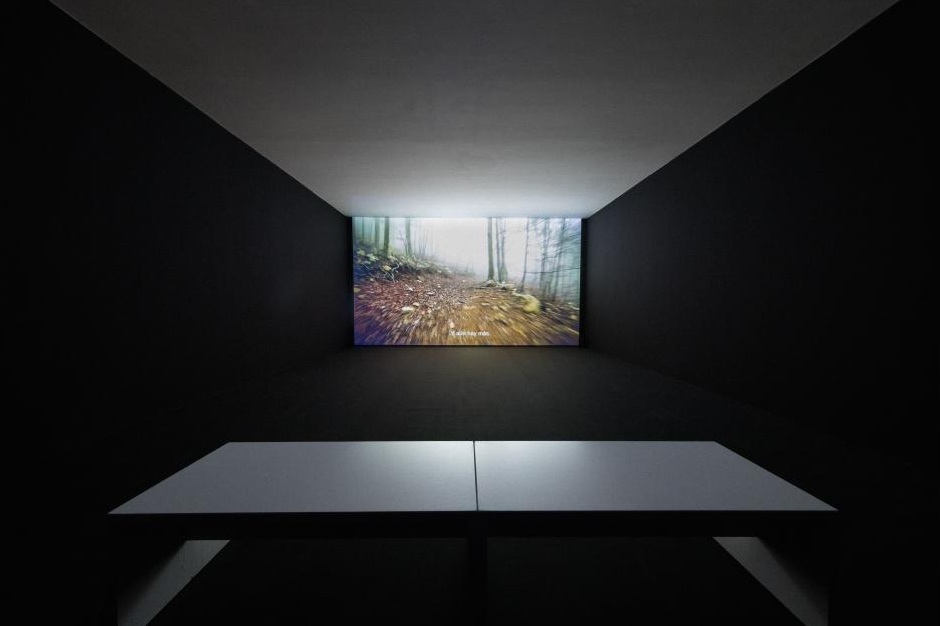
"Perception and uncertainty" is not a thesis exhibition, but rather an immersive experience that, using images and their limits, prompts us to reframe the tension between perception and uncertainty. Three artists who work with moving images from very different perspectives and with diverse experiential approaches have been selected for this purpose: Jaione Camborda from filmmaking, and Joan Fontcuberta and Max de Esteban from photography and video.
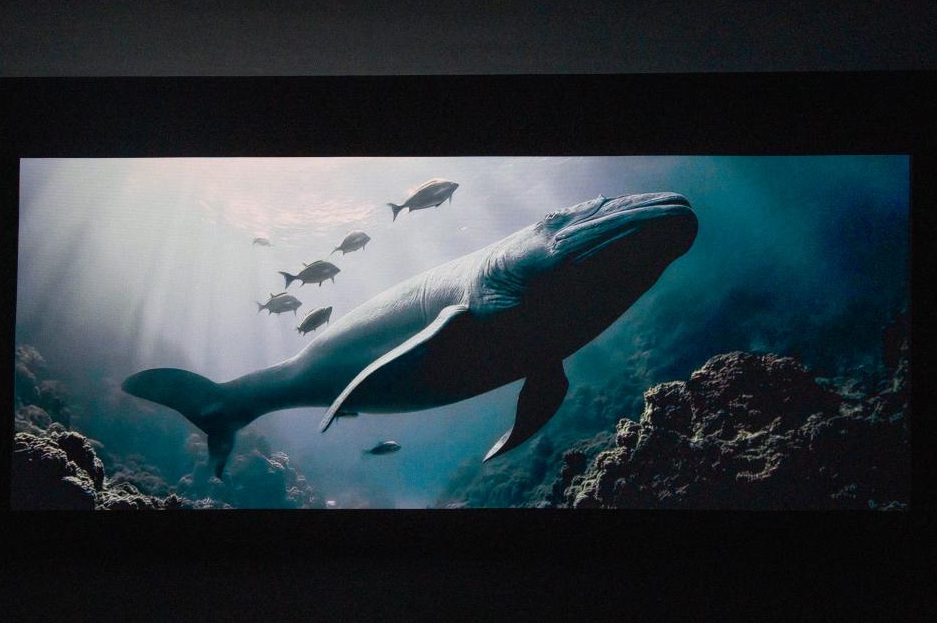
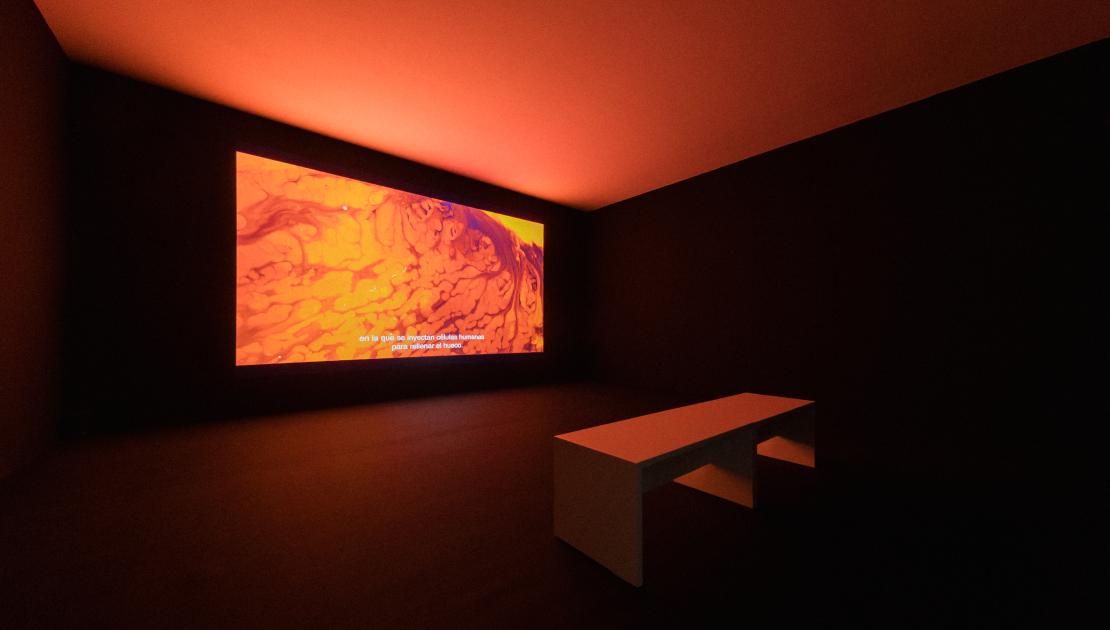
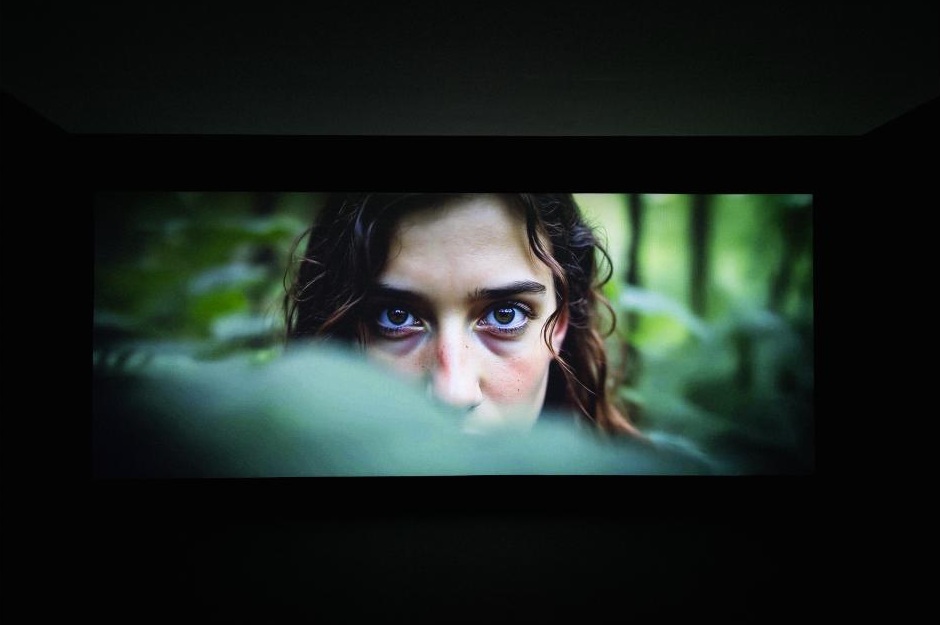
Each selected piece addresses the ideas of perception and uncertainty from a different angle: in "Génesis.IA (Xénese.IA)", Joan Fontcuberta explores the magic of artificial intelligence and its potential as a generator of unprecedented visual experiences; the works of Max de Esteban, brought together in a dystopian diptych, warn of the risks of manipulating science in the service of the bioeconomy and global infopolitics. Finally, Jaione Camborda’s installation introduces us, through empathy, to the perceptual universe of a deafblind person, offering a metaphor for the infinite possibilities and contradictions of the quantum world.