LLUÍS HORTALÀ. BEFORE THE LAW
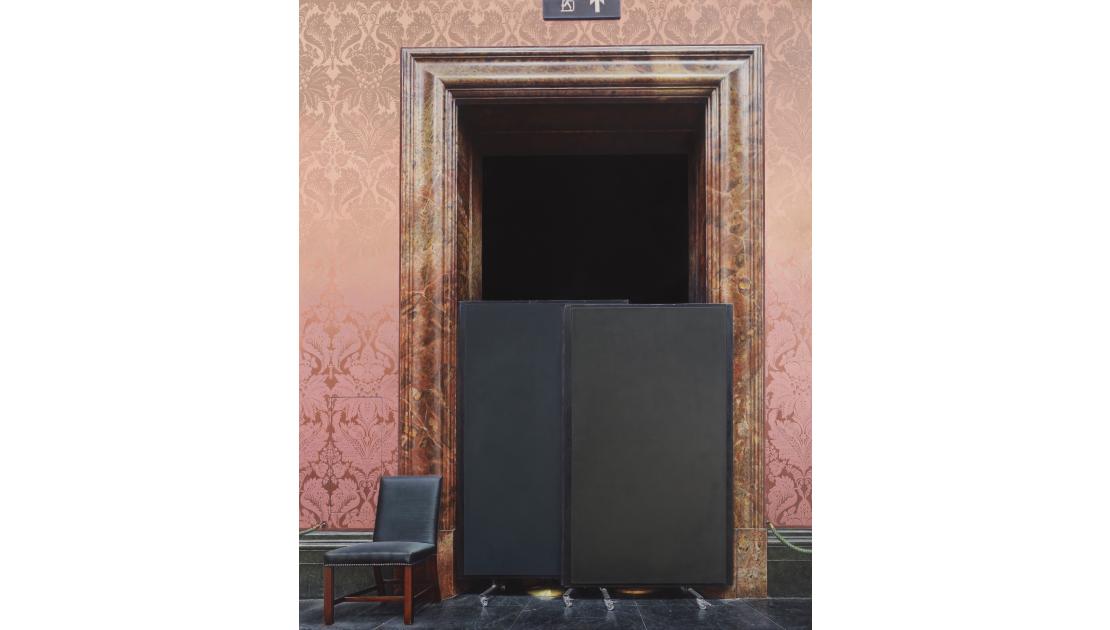
Lluís Hortalà (Olot, Girona, 1959) plays with the deception and confusion of the gaze, immersing us in the art of trompe l 'oeil. Focusing carefully on detail, a painting that is realistic to the extreme, that is mimetic with textures and sheens, capable of visually reproducing the touch and sometimes the cold temperature of the stones. In this painting it seems that there is nothing but technique; impeccable, it goes without saying. However, behind the technique, sense and meanings emerge. In each of the works there is a narrative, a network of connections that constructs a reflective framework on history; also, and above all, the history of painting and culture.
His work from the early 2000s was characterised by studying the landscape he frequented as a climber and mountaineer. The landscape was the mountains, the shapes of the pinnacles, but above all the rock, the texture of the stone, the capricious geological and mineral roughness. This attention to the surface of rocks, to their texture, was a precedent for everything that would come later: the representation of an architectural ornamentation and of styles that frame ideologies and policies, ways of judging.
With the title of the exhibition, Before the Law—which also lends its name to several of his works—, Lluís Hortalà refers us to one of Kafka's best-known stories, perhaps the most popular along with The Metamorphosis (also called The Transformation in recent translations). With this reference, Hortalà invites us to explore the tension between entrance and barrier, between the visible and the forbidden, themes that pervade the Kafkaesque universe and resonate in his artistic work.
The exhibition includes some of his most recent series, which progressively develop judgments on the changing laws of taste. It begins with the contrast between rococo and neoclassical fireplaces, which preceded and formally announced the guillotine: a way of judging life or death from the law during the French Revolution. It continues with the walls—painted or fabric-covered—and the doors that connect the halls of great European museums, such as the Prado in Madrid or the National Gallery in London. All of them became courts whence to judge not only art, but also the nations that created them.
Finally, we come to the door and windows of the courtroom that hosted the Nuremberg trials, which laid the foundations of the post-1945 democratic world, in which we have lived to this day. In that process, the crimes of Nazism were judged, affirming the need for legitimate laws, in the absence of which lurk the demons with which we have had to live: the same ones that are resurfacing today, calling for totalitarian leadership and raising the banner of authoritarian whims and hatred. Remembrance helps us to fight and resist. Among us, Kafka is a beacon that warns of the darkness that threatens us.